
Construction jobs have long been considered one of the most important pillars of economic growth in the United States. Infrastructure development, housing expansion, and commercial projects are continuously being carried out across the country. As cities expand and populations increase, new buildings, roads, bridges, airports, and industrial facilities are constantly being constructed.
Because of these developments, construction workers are highly needed throughout the country. Both skilled and unskilled workers are employed on thousands of construction sites every year. Large construction firms, engineering companies, and private contractors regularly hire workers for projects that range from small residential buildings to massive infrastructure developments.
In recent years, the construction sector in the United States has experienced significant labor shortages. Many experienced workers have retired, while the number of younger workers entering the trade has not been sufficient to meet industry demands. As a result, companies have begun to recruit workers internationally.
For international job seekers, construction work has become an attractive opportunity because competitive salaries are offered. In some specialized roles, salaries can reach or even exceed $150,000 annually. Because of this high earning potential, many foreign workers are exploring opportunities to work in the U.S. construction industry.
Why Construction Jobs Can Pay Up to $150,000
High salaries in the construction sector are usually associated with experience, specialization, and project management responsibilities. Workers who possess advanced technical skills are often rewarded with higher wages due to the complexity of the tasks they perform.
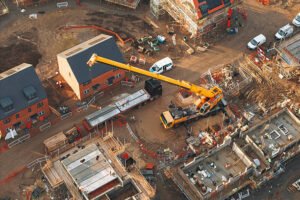
Construction managers, engineers, crane operators, and specialized welders are among the professionals who may earn salaries approaching or exceeding $150,000 per year. These roles involve significant responsibility, technical expertise, and decision-making authority.
Additionally, overtime work is frequently available in construction projects. When deadlines approach or major infrastructure developments are underway, workers may be required to work extended hours. Overtime pay can significantly increase total annual earnings.
Large-scale projects in major cities also contribute to higher salary levels. High-rise buildings, bridges, tunnels, and transportation systems require highly trained professionals who are compensated accordingly.
Opportunities for International Workers
Due to ongoing labor shortages, international workers are increasingly welcomed into the U.S. construction industry. Employers often seek experienced workers from other countries to help fill gaps in the labor market.
Visa sponsorship programs allow foreign workers to legally work in the United States. When companies cannot find enough domestic workers, they may sponsor international candidates through government-approved visa programs.
This opportunity has created pathways for skilled tradespeople, technicians, engineers, and laborers from around the world to build careers in the United States construction sector.
Understanding the Construction Industry in the United States
Growth of Infrastructure Projects
In recent years, significant investments have been made in infrastructure development across the United States. Government programs and private investments have supported the construction of highways, rail systems, bridges, airports, and energy facilities.
Large infrastructure bills have been introduced to modernize aging structures and improve transportation systems. As a result, thousands of construction projects have been initiated across multiple states.
These projects require a wide variety of workers, including engineers, electricians, welders, equipment operators, and general laborers. The growing number of projects has therefore created a strong demand for construction workers.
Major Construction Sectors Hiring Workers
The construction industry is divided into several major sectors. Each sector requires different types of workers and skill sets.
Residential construction involves the building of houses, apartments, and residential complexes. Workers such as carpenters, plumbers, electricians, and painters are commonly employed in this sector.
Commercial construction focuses on offices, shopping centers, hotels, and educational institutions. These projects are often larger and require coordination between multiple contractors and specialists.
Industrial construction involves factories, power plants, warehouses, and manufacturing facilities. Specialized technical workers are often required for these projects.
Infrastructure construction includes roads, bridges, airports, railways, and tunnels. These projects are usually funded by government agencies and require large teams of engineers and construction workers.
Demand for Skilled and Unskilled Workers
Both skilled and unskilled workers are needed in construction. Skilled workers include electricians, plumbers, welders, crane operators, and engineers. These professionals require training, certification, and experience.
Unskilled workers perform tasks such as material handling, site preparation, cleaning, and assisting skilled tradespeople. While formal education may not always be required, physical strength and basic construction knowledge are important.
Because of the wide range of roles available, individuals with different levels of education and experience can find employment opportunities in the construction sector.
Types of High-Paying Construction Jobs in the United States
Construction Project Managers
Construction project managers are responsible for overseeing construction projects from beginning to completion. Project planning, budgeting, scheduling, and team coordination are handled by these professionals.
They ensure that projects are completed on time, within budget, and according to safety regulations. Because of the high level of responsibility involved, construction managers are among the highest-paid professionals in the industry.
Construction Engineers
Construction engineers are responsible for designing, analyzing, and supervising construction projects. Engineering principles are applied to ensure that structures are safe, stable, and efficient.
These professionals work closely with architects, contractors, and project managers to ensure that technical requirements are met.
Electricians
Electricians are responsible for installing and maintaining electrical systems in residential, commercial, and industrial buildings. Electrical wiring, lighting systems, and power distribution networks are installed by electricians.
Because electricity is a critical component of modern infrastructure, electricians are consistently in high demand.
Plumbers
Plumbers install and repair water supply systems, drainage networks, and heating systems. Their work ensures that buildings have reliable water and sanitation services.
Experienced plumbers who work on large commercial or industrial projects can earn significant salaries.
Welders
Welders play an essential role in the construction of bridges, pipelines, buildings, and industrial structures. Metal components are joined together through specialized welding techniques.
Highly skilled welders are particularly valuable in infrastructure and energy projects.
Education Requirements for Construction Jobs
Degrees Required for Management Roles
For leadership positions such as construction managers or engineers, a university degree is often required. Degrees in construction management, civil engineering, or architecture are commonly preferred.
These programs provide knowledge in project planning, cost management, structural design, and safety regulations.
Technical Certifications for Skilled Trades
Skilled trades workers often obtain training through vocational schools or apprenticeship programs. Certifications are issued after training programs have been completed.
For example, electricians and plumbers are typically required to obtain licenses before practicing their trades.
Entry-Level Education Requirements
For general labor positions, formal education requirements are usually minimal. A high school diploma or equivalent education may be sufficient for entry-level roles.
However, on-the-job training is often provided to help workers learn construction techniques and safety procedures.
Skills Required for Construction Jobs
Technical Skills
Several technical skills are required for construction work. Workers must understand how to read blueprints, operate machinery, and measure construction materials accurately.
These skills help ensure that buildings and structures are constructed according to design specifications.
Physical Skills
Construction work is physically demanding. Workers are often required to lift heavy materials, climb ladders, and work in outdoor environments.
Physical endurance, strength, and coordination are therefore essential.
Soft Skills
Communication and teamwork are important in construction environments. Workers must coordinate with supervisors, engineers, and fellow workers to complete tasks efficiently.
Problem-solving abilities are also valuable when unexpected challenges arise during construction projects.
Visa Sponsorship for Construction Workers
Common Work Visas for Foreign Workers
Several visa programs allow foreign workers to work legally in the United States.
The H-2B visa is often used for temporary non-agricultural workers. Construction companies may use this visa to hire foreign workers when labor shortages occur.
The H-1B visa is typically used for specialized professionals such as engineers.
The EB-3 visa may also be used for skilled and unskilled workers who wish to obtain permanent employment in the United States.
Employer Sponsorship Process
To receive visa sponsorship, a job offer must first be provided by a U.S. employer. The employer must demonstrate that qualified domestic workers are not available for the position.
After this requirement is satisfied, the employer may begin the visa application process on behalf of the foreign worker.
Best Cities in the United States for Construction Jobs
Several American cities are experiencing strong construction growth.
Opportunities are widely available in cities such as:
- Houston
- Dallas
- New York City
- Los Angeles
- Miami
Large infrastructure projects and real estate developments are frequently undertaken in these cities.
Benefits of Working in Construction in the United States
High Earning Potential
Construction workers in the United States are often paid competitive wages. Workers with specialized skills can earn very high salaries, especially when overtime pay is included.
Job Security
Because infrastructure development continues to grow, construction workers are expected to remain in high demand for many years.
Career Advancement Opportunities
Entry-level workers can eventually progress to supervisory or management roles. With experience and training, workers may transition into specialized positions that offer higher salaries.

Conclusion – tips to get the job
Construction jobs in the United States provide valuable opportunities for both domestic and international workers. High salaries, strong job demand, and long-term career potential make the construction sector an attractive industry.
Through proper training, certification, and preparation, international job seekers can position themselves for successful careers in the American construction industry. Visa sponsorship programs further increase accessibility for foreign workers who wish to participate in these opportunities.
With careful planning, dedication, and skill development, construction professionals can achieve financial stability and career growth within one of the largest construction markets in the world.